
Who’s Liable for Snow and Ice at Your Business?
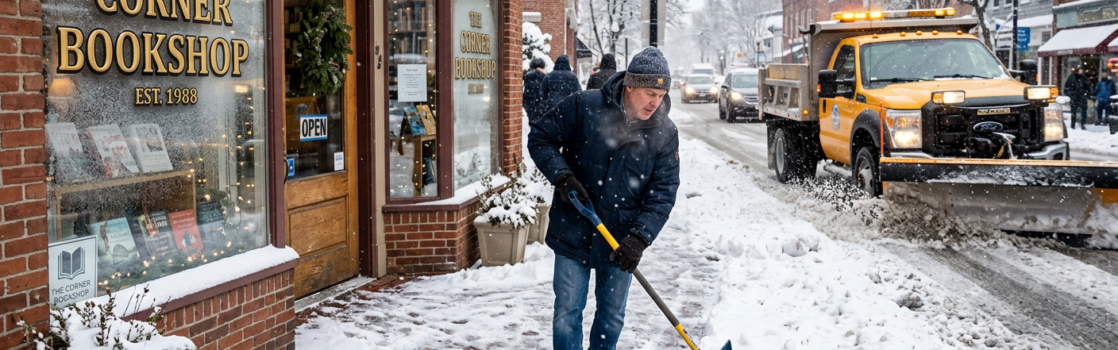
The first real snowfall of the season tests two things: your plow contractor and your contracts. When a customer or delivery driver slips in your lot, the question is rarely whether someone gets sued. It’s who.
Quick answer: Whether a property owner must clear snow and ice depends on state law, local ordinances and the contracts in place. Some states limit an owner’s duty for snow and ice that falls naturally. Others expect reasonable removal. In every state, leases, snow removal contracts and the way snow is cleared can create responsibility, and with it, liability.
Is a business responsible for snow and ice on its property?
The rules vary by state and sometimes by city. Even where an owner’s general duty is limited, liability often arises in situations like these:
- Conditions the property makes worse: ice created or worsened by the building or lot, such as a downspout that drains across a walkway and refreezes.
- Removal done carelessly: once you or your contractor clears snow, doing it in a way that makes conditions worse can create liability. Plow piles that melt and refreeze across a sidewalk are a common example.
- A contract or lease: an agreement can assign the duty to clear snow to a specific party.
- Local ordinances: many cities require businesses to clear public sidewalks within a set time after a storm.
The details depend on the facts and the location, so talk with legal counsel about a specific situation.
Who pays: the owner, the tenant or the plow contractor?
Often all three get named. Picture a retail plaza where the lease makes tenants responsible for their storefront sidewalks, and the landlord hires a contractor to plow the parking lot. A customer falls at a store entrance after the plow pushed snow onto the walk overnight. The landlord, the tenant and the contractor each point to someone else, and the contracts decide who actually pays.
What should a snow removal contract include?
- Clear scope: which areas are covered, the trigger depth, salting and how often the crew returns during a storm.
- Indemnity: the contractor agrees to defend and indemnify you for claims arising from its work.
- Additional insured status: you’re added to the contractor’s general liability policy, ideally on a primary and non-contributory basis with a waiver of subrogation.
- Adequate limits: confirm the contractor’s general liability, auto and umbrella limits, and get a current certificate before the season starts.
- Service logs: time-stamped records of when areas were plowed and salted are often the best defense in a slip-and-fall claim.
Check your own coverage, too
Some contractors’ policies limit or exclude snow plow operations, so a certificate alone doesn’t prove the coverage you’re counting on. Your own general liability policy and umbrella should respond to premises claims and to liability you take on under a lease. Confirm both before the next storm.
Hertvik Insurance Group reviews leases, snow removal contracts and certificates for business owners and property managers. Send yours before the season gets busy: CONTACT
General information, not legal advice. Snow and ice rules vary by state and city, and coverage depends on policy wording.